
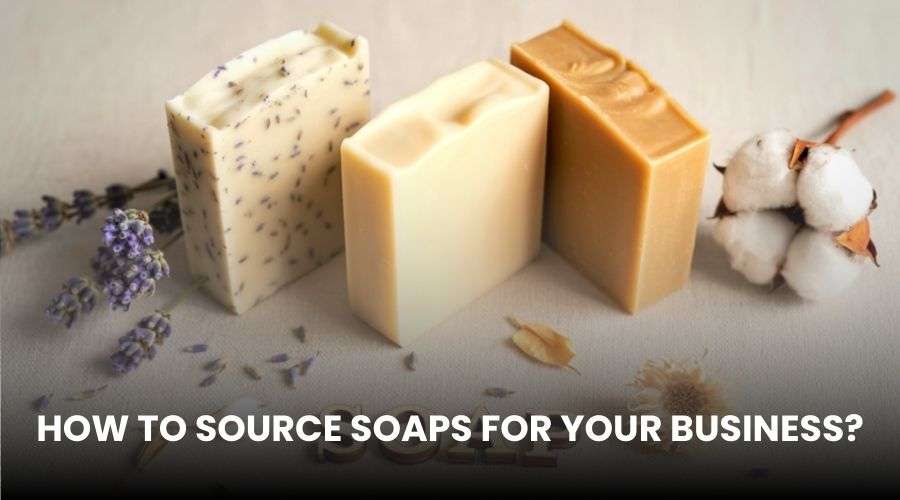
FMCG brands know how tough the competition is becoming in the soap market, especially since private label and white label services have become common. Many new brands are giving some competition to giants only through the smart selection of goods and services. How they are doing that is through outsourcing services. Many Chinese suppliers are out there who can offer low-cost soaps with complete private label service to global buyers. That is making it much easier for new brands and even distributors to launch their soap brands in a budget-friendly way. How they do that will also help you in sourcing soaps for your business. All you need to do is follow this guideline.
Until you select the target audience, you can’t choose the right type of soap for your business. The first thing you should do is choose a target audience. There are different needs of users, where some need beauty soaps, and some need antibacterial soaps. Likewise, you will have to decide whether you should go with liquid or bar soap. Similarly, you will have to further dig for the specification of soap. There are moisturizing soaps, exfoliating soaps, and whitening soaps in the market. Lots of considerations are involved in the soap selection process. Once you decide what kind of soap you want to go with, you move on to the next step.
Now, you know what kind of soap you want to source. It is time to locate the suppliers who can meet your requirements. There are lots of options available on local and international levels. It is all about the price and quality you aim for. Perhaps a local supplier can meet your requirements, or you may have to go for a global option. Here is what you should do.
If you want to keep things simple and low-cost, you can source organic soaps from a local manufacturer. It can be possible and convenient if your country has reliable options. Usually, every country has local soap manufacturers, but it is about the quality and features that some may lack. It is about the capacity of a manufacturer that needs to match your requirements in terms of quality, quantity, and price. If you fail to find any local soap supplier, here is the next option.
International sourcing of soaps is way more convenient today than in previous decades. Despite having lots of overseas logistics challenges, international sourcing is somehow easier today. Searching for a soap supplier on a B2B platform makes things way more efficient.
Likewise, there are traders available, like TrustEco Group, who can supply bulk soaps. You can try such sources for bulk supply of soup at affordable rates. TrustEco Group is a global trader of bar soaps that can also arrange liquid soap for its buyers. It has various sources that can manufacture the kind of soup you want in large volumes. Many international suppliers have more advantages when it comes to the custom production of soaps compared to local options.
Once you select a soap supplier for your business, here is the first thing you need to do. Ask for the quality standards your selected soap supplier follows. The quality standards will allow your soap to comply with safety rules. Governments do not allow any low-standard soap in the market, and you will have to be careful with that. Make sure your supplier follows ISO, GMP, EU, and similar standards. ISO 9001, 1400, and 45001 are some examples for you. Besides, soap manufacturers have to maintain a safe total fatty matter to comply with the grade they offer. Higher grade of soap contains higher TFM for soft results.
Also, ask for a soap sample to inspect the quality. If you choose a manufacturer, make sure they are an authentic one because some traders claim to be manufacturers. It doesn’t mean that traders are not reliable, but there are some elements in the market that trick buyers. In this way, you can do a factory audit for further inspection.
Then you go ahead with the soap production step if you trust the soap supplier. There are different types of production, and each type has different advantages. Here are the two main types of production that you can find.
If you want to launch a unique soap under your brand’s name, you should choose a private label service. The manufacturer will provide you with full custom production, where you can select the ingredients, form, color, fragrance, and benefits of the soap. That means you can also select the packaging that will be a custom one, and it is usually available in the industry. Many soap manufacturers offer this service at low rates.
Then there is a generic production or white-label production of soap. It means that you will get only a few limited customizations, which will be about the packaging of soap. This service is for brands that offer the same soap under different packaging. This option is cheaper in cost, and you can go with it if you want a generic soap for your brand.
Then ask the soap supplier to share the price, quantity, and MOQ details. A wholesale supplier will offer you discounts and flexible MOQs. So, what you need to do is ask about the per-unit price and every cost included in the entire process. Then you will be able to analyze if the soap sourcing is affordable for your brand or not. The logistics conditions, like port charges, vessel’s cost, and all kinds of payments involved in it. Of course, if you choose a local supplier, you will only have to ask about the production and local logistics costs.
Complete all the documentation processes, whether they are about customs, shipping vessels, or transportation services. These documents will also include the payment and shipment responsibility at the origin and destination. You need to discuss all these factors with your soap supplier.
Then you can go ahead with a safe payment option, especially if you are choosing an international supplier. Choose a neutral payment platform that can freeze the payment in case anything suspicious happens from any side. Both parties have the right to do that by asking the payment service provider for evidence.
Once the shipment arrives at the destination, you will have to ask for post-delivery services. It is like order replenishment, return orders, and similar activities in the process. If your customers like the quality of soap, which you will find through revenues, you can continue your trade with this supplier. Although it will take time for your soap brand to grow, you can have an idea about the customers’ response through the units purchased in a few months.
And that is how you can source soaps for your business. Many FMCG brands extend their product line by launching new soaps. They choose a supplier or a manufacturer instead of owning a production. Why would someone go for a new capital and land when there is a cost-effective option available? So, here is the result, and you can also source low-cost, standard, and custom soaps for your brand. All you have to do is decide what kind of soap, its fragrance, nature, and packaging you need. The rest of the job will be done by the manufacturer or trader you choose.
 trustecotrade@gmail.com


 +7 777 280 86 00